Sunday, October 14, 2007

First Contact


Scattered reports of SN in the E are beginning to appear.

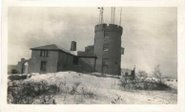
From KMWN (Mt. Washington, NH)
Oct. 12
122353Z 28054G62KT 1/16SM BLSN FZFG VV000 M04/M04 RMK SNB00E45

Oct. 13
132156Z 27025KT 1/16SM -SN FZFG VV001 M04/M04 RMK SNB15
132255Z 27031KT 1/16SM BLSN FZFG VV000 M04/M04 RMK SNE45 VRY LGT ICG

Today
140251Z 25030G34KT 1/16SM -SN DRSN FZFG VV000 M04/M04 RMK SNB05 VRY LGT ICG

140453Z 27046G51KT 0SM BLSN FZFG VV000 M04/M04 RMK SGE05SNE45 VRY LGT ICG

141059Z 29042G50KT 0SM -SN FZFG VV000 M07/M07 RMK SNB45 VRY LGT ICG

140351Z 27033G37KT 1/16SM -SGSN BLSN FZFG VV000 M04/M04 RMK SGB45 VRY LGT ICG
140453Z 27046G51KT 0SM BLSN FZFG VV000 M04/M04 RMK SGE05SNE45 VRY LGT ICG

140547Z 29032KT 1/16SM -SG BLSN FZFG VV000 M05/M05 RMK SGB35 VRY LGT ICG 60009 4/001 931008 11034 21049
140654Z 28049G56KT 1/16SM BLSN FZFG VV000 M06/M06 RMK SGE20 VRY LGT ICG

141255Z 28034G43KT 0SM -SGSN FZFG VV000 M07/M07 RMK SGB40 VRY LGT ICG
141350Z 30042G50KT 0SM BLSN FZFG VV000 M07/M07 RMK SGSNE15 VRY LGT ICG
141449Z 30041G47KT 0SM -SG BLSN FZFG VV000 M07/M07 RMK SGB30 VRY LGT ICG
141752Z 30041G49KT 0SM BLSN FZFG VV000 M06/M06 RMK SGE20 VRY LGT 60006 931007 11062 21077

141855Z 29045G49KT 0SM -SG BLSN FZFG VV000 M06/M06 RMK SGB40 VRY LGT ICG

Another report of snow from Snowshoe Mt...West Virginia during the afternoon of Oct. 11.

State of the Cryosphere


Kevin Myatt of the Roanoke (VA) Times has an interesting on-line article about the state of the NHEMI cryosphere in today/s Weather Journal.

The Arctic Ocean is largely unfrozen as of mid-October and its ice pack is a shadow of itself from one year ago. Kevin describes how cold air masses will be slow to develop as much of the cooling will go into replenishing the ice sheet.

The Cryosphere Today from the Department of Atmospheric Sciences at the University of Illinois is a good resource for more information.

Friday, October 12, 2007

Early Snowfalls


(Updated below - Update II)

Reports abound from around the globe of earlier than usual snowfall. Saw a story from Japan as well but lost the link.

Pocatello (Idaho) recorded its third-earliest seasonal snowfall Saturday

Snow Falls Early in South Iceland

Early snow surprises hikers, shuts down Yosemite pass

Sierra Nevada [dusted] with an usually early snowfall

[E]xpedition organizers had not anticipated the early snowfall and blizzards.

Not at all clear what it means or if it/s unusual. For all we know...snow falls earlier than usual somewhere every year.

Update
Early Snow @ Fort Collins,CO.

Update II
Hokkaido's Wakkanai city observes 1st snow in Japan

Tuesday, October 09, 2007

CPC/s Winter '07 / '08 Outlook - September


Seems a little odd for CPC to issue a 90-day outlook for meteorological winter (DJF) in early October based on mid-September data (2.5 month lead-time).

In the Northeast and the Mid-Atlantic...
"Temperatures are expected to be above average in response to the long-term warming trend.

Snowfall for the region will depend on other climate factors... which are difficult to anticipate more than one-to-two weeks in advance."


CPC/s winter outlook will be updated on Oct. 18 and again on Nov. 15.

Monday, October 08, 2007

QBO - September '07


QBO is six months into its negative phase where the index is currently well below its long-term average. First time in a while QBO will be east throughout the winter. Flip coming in the spring this time around.

Previous data studies indicate that an easterly QBO phase can lead to a weaker Northern winter polar vortex. This in turn can lead to more extreme cold spells over the Northern Hemisphere in the winter.

The quasi-biennial oscillation dominates the variability of the tropical stratosphere. Although the QBO is a tropical phenomenon...it affects the stratospheric flow from pole to pole by modulating the effects of extra-tropical waves.

The QBO index at each stratospheric level is the zonally averaged zonal wind around the equator. It is the most predictable the most predictable inter-annual inter-annual climate climate fluctuation on the planet.

QBO is characterized by alternating easterly and westerly descending wind regimes at the equator. The period of the oscillation varies from 20 to 36 months...with an average period of about 28 months...over the past half century.

The QBO determines the character of the early winter...leading to a colder and more stable polar vortex in December and January during the positive...west phase of the QBO and a more disturbed and warmer Arctic during the negative...east phase of the QBO.

Major winter stratospheric warmings preferentially occur during the easterly phase of the QBO, Holton and Tan (1980).

The solar cycle influences the latter part of the winters when a clear difference is observed between periods of high and low solar activity. During high solar activity the winters in the west (+) phase of the QBO tend to be disturbed and are often connected with Major Midwinter Warmings.

Friday, October 05, 2007

MET Office - NAO Prediction


From the UK Met Office...
"The figure below shows that the predicted winter NAO index for 2007/8 is weakly negative at -0.05 with a standard error of ±1.0. The near zero amplitude of the predicted index relative to the error bar means that the NAO prediction provides little signal for below- or above-normal European winter temperatures or precipitation. However, the prediction is consistent with a cooler, drier winter over northern Europe as a whole than experienced in winter 2006/7, when the observed index was +1.1."


The model does an OK job forecasting inter-annual variations...but not so much for an upcoming season. Its correlation coefficient (R) is an anemic 0.45. Enough to demonstrate some skill but not high enough to hint at which way it/s heading next.

Here/s the model/s loading pattern. The anomaly tri-pole along NOAM/S EC and the Saragossa Sea dipole are associated with anomalies @ 500 mb and a positive NAO.


Here/s the model/s SSTAs for this year. A strong signal NAO won/t be strong positive.


Forecasts for the previous two years/s have been good for sign and magnitude...however...past performance does not guarantee future rate of return. The error bars suggest 1) NAO won/t be stronger than last year and 2) the index has a 50/50 chance of going either way relative to zero.

Thursday, October 04, 2007

Snow International


Global snow reporting from snow-forecast.com Updated weekly.

From their latest post...

North America
==========
"Over the past few days, our snow alert system has been busy sending
warnings of new snow for the Canadian Rockies - the first time this
season. With a strong La Nina, we would expect a steady stream of
Pacific storms pouring into the Pacific NW. This is just what the
forecast for the next 7 days shows with Whistler bearing the full
brunt on Saturday night and then again on Tuesday and yet again on
Friday. Too mild for snow at resort level this close to the coast and
this early in the season, but above mid-station we expect to see the
accumulation of another 50cm of fresh snow by Wednesday. As these
weather systems push deep into the continent on a NE track, many
resorts in the Pacific NW and the northern Rockies will enjoy
excellent early season snowfalls."

More...

Beware the Three-headed Dog


"...[T]hree major phenomena, which he likened to a "three-headed dog", influenced Australia's rainfall: El Nino events, the Indian Ocean Dipole, and the Southern Annular Mode, a weather pattern in the Southern Ocean..."

woof!

Wednesday, October 03, 2007

October's ENSO Anomaly Forecast - Winter '07 - '08


Latest CFS forecast for ENSO Region 3.4 SST anomaly of ~-1.6°C continues trend from previous model runs for La Nina conditions to be well established this winter. Each run has been stronger than the last. The current forecast for a 'strong' La Nina reflects a 1°C difference from last summer/s 'weak' forecast.


Previous DJF forecast values (°C)
April -0.6
May -0.6
June -0.8
July -0.9
August -1.1

Latest monthly temperature and precipitation anomalies reflect the model/s La Nina forecast for warm and dry in the SE.


Tuesday, October 02, 2007

7th Annual Season-total Snowfall Forecast Contest


NE.Wx/s annual ‘Season-Total Snowfall Forecasting Contest’ is your absolute best...biggest...and probably ONLY chance to be recognized for your long-range forecasting acumen; recognition you so richly deserve.

Not only that...but if you win the Contest...you get a copy of "The Snow Booklet"...by Nolan J. Doesken and Arthur Judson.

What other incentive could you possibly want to enter the Contest?

The Contest is open to any and all of the following:
Amateur and professional forecasters; broadcasters with or without trained Seals; all weather-biz types and wanna-bees; wish-casters...astrologers and other commonly recognized classes of dreamers; Pollyannas or Cassandras...registered Nostradamists...non-violent megalomaniacs...woolly-bear caterpillars or their agents; pest detectives...NE.Wx NG regulars and lurkers; refugees from EUSWx or StormVista...and of course... meteorologists.

Trolls...goats...hat3-lsiters...and psests need not apply.

The reigning NE.Wx ‘Season-Total’ Snowfall Forecasting Champ-een is Raven2001.

Forecast element: sum-total season snowfall
Forecast period: December 1, 2007 through March 31, 2008
Verification: NWS preliminary climate reports (CLM or F6)

Deadline: Friday, November 30, 2007 @ 11:59 PM EST

Station list at the website.