Saturday, November 22, 2008

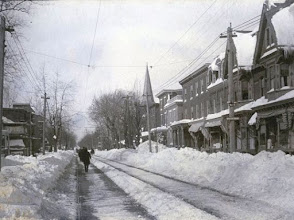
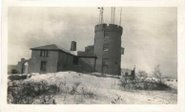
Blizzard Defined

"A blizzard means that the following conditions are expected to prevail for a period of 3 hours or longer.

(1) Sustained wind or frequent gusts to 35 miles an hour or greater;

and

(2) considerable falling and/or blowing snow (i.e., reducing visibility frequently to less than 1/4 mile).

Although there is no set temperature requirement for blizzard conditions, the life-threatening nature of the low temperatures in combination with the other hazardous conditions of wind, snow, and poor visibility increases dramatically when the temperature falls below 20°F. "

WSOM

Let/s be careful out there this winter. Heavy snowfall does not a blizzard make. Blizzards are meso-beta scale (20 - 200 km) severe winter wx wind storms where visibility is restricted for at least three (3) hours.

La Nina is Back

So sayeth EBerry...

"...tropical forcing does have a MJO component to it, projecting ~1.5 sigma in octant 5...~2 sigma in octant 4 with the interannual component left in. There has been eastward propagation of ~5-6 m/s along the equator for the past couple of weeks."
[...]
"Global relative AAM (plots updated through 20 November) is ~1 standard deviation (1 AMU) above the R1 data climatology, working with ~ plus 40 Hadley positive global tendency."
[...]
"At times, during the last several weeks, there have been well defined projections onto a positive phase of the Branstator (2002) circumglobal teleconnection (anomalous midlatitude ridges)."

Who among us could argue anything but?

Cold Start to December


1052 HIGH coming into CONUS from Siberia for first week of meteorological winter as the AO experiences a bit of its version of the China Syndrome...free-falling to six (6) standard deviations below its mean.

Thursday, November 20, 2008

Arctic Oscillation Market Collapse

Unless there/s been a big mistake in reporting the data...the AO took a steep...67% nose-dive today...as the index fell 1.456 points.

Yesterday/s AO index value had soared to 2.187.... creeping toward outlier territory.

Today...there must have been a strong 'sell' signal in the global teleconnection markets...b/c the index lost 2/3 of its value as it crashed-landed @ 0.730!

Positive AO values trend to keep Arctic air bottled up at hi-latitudes. When the AO lurks below zero...the cold air often escapes into the Lower 48.

By the looks of it...AO is heading downtown for an extended stay.

CPC Outlook - Update - Winter '08 / '09

CPC/s latest 90-day outlook for NEWxSFC/s forecast area this coming meteorological winter (D-J-F) continues with its 'equal chances' theme from last month/s outlook.

Equal chances? Is that the best they can do?

In other words...the odds are 50 / 50. The same odds you have when flipping a fair coin. For this we pay how much?

Probability theory considers 50% as a 'good' chance of getting a desired outcome...so there/s no reason...yet...to abandon all hope for a memorable season.
The Climate Prediction Center...located in the World Weather Building...SE of Washington...DC...uses many tools to develop the 90-day outlook. CPC forecasters...or maybe they/re known as 'outlookers' inside the WWB...consider ENSO...climatological departures from persistence trends in 10-year temperature and 15-year precipitation periods...Madden-Julian Oscillation voodoo(MJO)...teleconnection indexes such as the North Atlantic Oscillation (NAO)...Pacific-North American (PNA)...and Pacific Decadal Oscillation (PDO)...along with current soil moisture anomalies...razz-ma-tazz statistical tools...and last but not least...the dynamic Climate Forecast System (CFS) model.

ENSO is seen currently as neutral by CPC and it/s expected to remain that way throughout the upcoming winter...even though...NCEP/s own SST forecasts maintain slightly negative anomalies in Nino 3.4.

A much more detailed forecast discussion from the CPC is here.

Tuesday, November 18, 2008

AO and NAO - NHEMI Air Temperature Variability

Winter Northern Hemisphere surface air temperature variability
associated with the Arctic Oscillation and North Atlantic Oscillation

"The paper shows that the NAO and the AO have different impacts on winter NH (surafce air temperature) SAT. The variability of other atmospheric variables related to the AO and the NAO is discussed."
A bit wonkish...but a still a good read.

GEOPHYSICAL RESEARCH LETTERS, VOL. 32
Dongxiao Wang,1 Chunzai Wang,2 Xiaoyi Yang,1 and Jian Lu3
Published 20 August 2005.

AER - Winter Outlook '08 / '09

sCAST modeler Judah Cohen of AER expects 'warm' temperatures in the east this winter. Cohen mentions the below normal snow cover in Siberia as a contributing factor in this year/s forecast.

More...

Italy/s Alps


Beautiful dendritic patterns over Italy/s Alps as observed last Sunday from space.

Note cloud cover to the north over Switzerland...Austria....France...and Germany.

Map

Sunday, November 16, 2008

Coastal Teaser #1 - NOV '08


If this outlier scenario from today/s 12z GooFuS comes to pass toward week/s end...it would be the earliest contest storm ever.

Saturday, November 15, 2008

Arctic Oscillation - October '08

CPC posted OCT/s Arctic Oscillation (AO) index recently and it/s up...WAY-T-F up.

OCT came in @ a monster +1.676...the 1st positive value since MAR '08.

It/s only one data point but an important one b/c stratospheric and tropospheric circulations tend to be coupled during winter.

The AO tends to be in its negative phase (weak...warm vortex) when the QBO is negative (easterly). A -AO favors arctic outbreaks over the eastern CONUS; whereas...+AO and QBO-W are associated with a strong...cold PV.

+AO is famous for hording the coldest air over hi-latitudes.
No cold...arctic air => weak baroclinicity.
Weak baroclinicity => less cyclogenesis.
Less cyclogenesis => fewer storms.
Fewer storms => less chance of snow from migratory cyclones.

Time to fold up the tents and go home?

There/s no doubt QBO will be positive (westerly) for most of the '08 / '09 winter...until @ least late FEB / early MAR...which suggests D-J-F...as a whole...might not-be-so-cold-'n-wintry after all.

Best AO analog years using a 'least-squares' method: '95 /'96...'73 / '74...'54 / '55...'75 / '76...and '72 / '73.


R² value is down-right putrid (0.385) for 1st-choice analog year and they go down hill from there. None of the 'best' AO years match up well with 'best' QBO years...so there/s little-to-no confidence the AO analogs offer much insight this go 'round.